Hire Luis Alberto Lacalle for Talks, Lectures, and Experience Creators
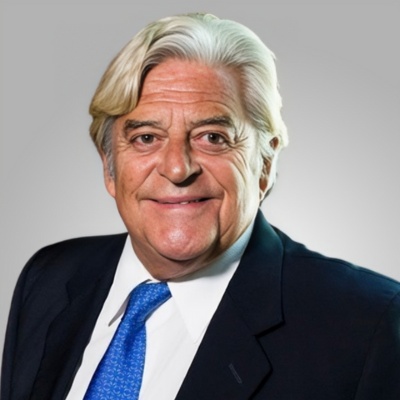
Luis Alberto Lacalle
Former president of Uruguay, recognized for his political career and democratic vision. He inspires others with his experience and commitment, conveying that leadership requires conviction, dialogue, and a sense of history.
How do I hire Luis Alberto Lacalle?
Who is Luis Alberto Lacalle?
Luis Alberto Lacalle comes from one of Uruguay’s most politically prominent families, a fact that had a decisive influence on his career. After earning his law degree from the University of the Republic, he began his political career in the Herrerista faction of the National Party. He was elected to the Chamber of Deputies in 1971, a position he held until the 1973 coup d’état. During the civilian-military dictatorship, he actively opposed the regime and was even the target of a poisoning attempt in 1978—an episode known as the “poisoned wine plot,” which sought to eliminate several opposition leaders.
Following the restoration of democracy, he was elected to the Senate in 1984. His leadership within the National Party was consolidated, and in the 1989 elections, he was elected President of the Eastern Republic of Uruguay, taking office in March 1990 for a five-year term. His governing program, called “Respuesta Nacional,” focused on two main pillars: macroeconomic stabilization and the modernization of the state—the latter understood as a process of deregulation, opening up to the outside world, and promoting privatization.
During his presidency (1990–1995), one of his most significant actions was the implementation of a Fiscal Adjustment Act in 1990, which sought to reduce the deficit through tax increases and a plan to dismantle price indexation in the economy. In addition, he promoted structural reforms, including the Ports Act and the freedom to contract with any insurance provider, which modernized government management and infrastructure. The milestone of his administration with the greatest regional significance was the signing of the founding treaty of Mercosur in Asunción in 1991, alongside the presidents of Argentina, Brazil, and Paraguay, with the aim of positioning Uruguay as the “hinge of integration.”
After leaving the presidency, Luis Alberto Lacalle remained active in politics, being elected to the Senate again and serving twice as chairman of the National Party’s Executive Committee. He attempted to return to the presidency in the 1999 and 2009 elections, demonstrating his persistence in the political arena. His legacy lives on today through his son, Luis Lacalle Pou, who followed in his footsteps by being elected president in 2019, marking the continuity of one of Uruguay’s most important political dynasties.