
Book Lars Peter Hansen for Talks, Lectures, and Experience Creators
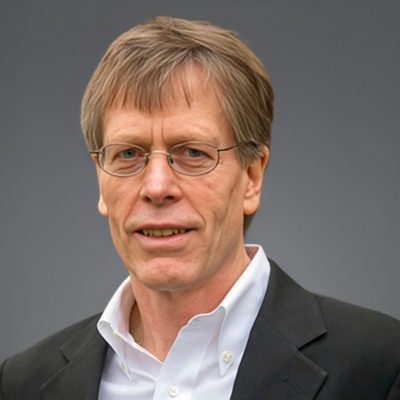
Lars Peter Hansen
An economist and Nobel laureate, recognized for his research on risk and financial markets. He inspires confidence in science and rigorous analysis, demonstrating how knowledge sheds light on complex decisions.
How can I hire Lars Peter Hansen?
Who is Lars Peter Hansen?
Lars Peter Hansen earned his undergraduate degrees in mathematics and political science from Utah State University and received his Ph.D. in economics from the University of Minnesota. After serving as a professor at Carnegie Mellon University, he joined the University of Chicago in 1981, where he holds the distinguished David Rockefeller Chair and is a professor of economics and statistics. His work focuses on understanding how economic agents make decisions in environments of risk and changing uncertainty.
The contribution that earned him the Nobel Prize—and which has revolutionized econometrics—is the development of the Generalized Method of Moments (GMM) in the 1980s. The GMM is a statistical technique that allows researchers to test economic theories involving rational expectations and financial markets without having to fully specify the probability distribution of the data, making it particularly robust and adaptable to complex models. This methodology is now one of the dominant empirical tools in economic and financial research.
One of the key areas of application for his work is the analysis of asset prices, seeking to understand the complex interconnections between financial markets and the real economy from a macroeconomic perspective. In this field, Hansen has focused on modeling the fundamental difference between risk (situations with known probabilities) and uncertainty (situations with unknown probabilities, often referred to as Knightian uncertainty). This approach has provided crucial insights into how expectations and aversion to uncertainty affect market fluctuations.
Hansen is currently Director of Research at the Friedman-Becker Institute at the University of Chicago, where he co-leads the Macro Financial Modeling Group. His most recent research has focused on measuring “systemic risk” and its role in financial crises, such as that of 2008, advocating for the need to design robust and straightforward policies that avoid adding further uncertainty to the economic environment. His work is essential for the design of improved models that explain the dynamic linkages between the financial and real sectors of the global economy.