
Hire Paul Romer for Talks, Lectures, and Experience Creators
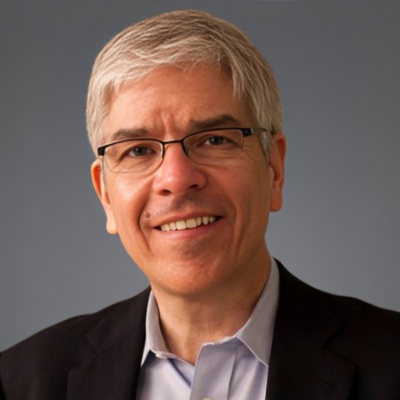
Paul Romer
An economist and Nobel laureate, recognized for his insights on innovation and growth. He inspires others with his ability to bridge theory and practice, demonstrating that economic creativity can generate positive social impact.
How do I hire Paul Romer?
Who is Paul Romer?
Paul Romer is an American economist, professor, entrepreneur, and activist who was awarded the Bank of Sweden Prize in Economic Sciences in Memory of Alfred Nobel in 2018. He is recognized worldwide as the pioneer and leading proponent of endogenous growth theory, a framework that revolutionized macroeconomic analysis by integrating technological innovation and knowledge as organic driving forces of long-term economic growth.
Romer received a solid academic education at elite universities, earning a bachelor’s degree in mathematics and a Ph.D. in economics from the University of Chicago in 1983, after completing graduate studies at the Massachusetts Institute of Technology (MIT). His doctoral work laid the foundation for his theory, which posits that productivity growth is not due solely to external (exogenous) factors, as was previously believed, but rather to internal (endogenous) variables within the economic system, such as investment in human capital, research, and innovation.
His professional career was not limited to academia, where he taught at prestigious institutions such as Stanford, Berkeley, and Chicago. He also ventured into the business world by founding Aplia in 2001, a company dedicated to developing online assignments and problems for college students, which was acquired in 2007. He subsequently held a position of great international significance as Chief Economist and Senior Vice President of the World Bank from 2016 to 2018.
Paul Romer’s work has had a fundamental impact on the design of public policy by demonstrating how economic forces can drive the generation of new ideas and sustained prosperity. In addition to his theoretical work, Romer has distinguished himself through his critique of conventional macroeconomics and his activism, proposing alternative models of regional development such as “charter cities.” His Nobel Prize win confirmed the significance of his work in integrating ideas and technological innovation into modern economic science.