Book Patrick Modiano for Talks, Lectures, and Experience Creators
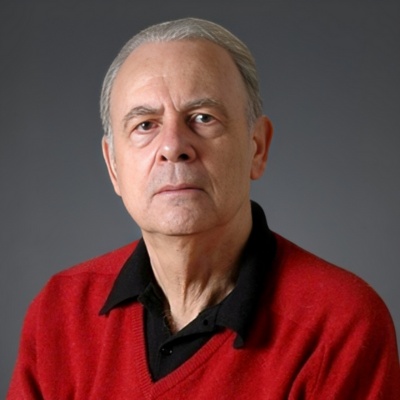
Patrick Modiano
A writer and Nobel laureate in Literature, admired for his sensitive and profound style. He inspires readers with stories that evoke memory and identity, demonstrating that literature can shed light on life and collective history
How can I hire Patrick Modiano?
Who is Patrick Modiano?
Patrick Modiano grew up in an atmosphere marked by absences and family secrets. His father, of Italian Jewish descent, led an ambiguous life during the Nazi occupation of France, and his mother was a Belgian actress who was constantly traveling. These turbulent origins and the elusive figure of his father profoundly shaped his literary sensibility and the central themes of his work. A chance encounter with the writer Raymond Queneau, his geometry teacher, was a turning point, as Queneau introduced him to the prestigious publishing house Gallimard, where he published his first novel, *La Place de l’Étoile*, at the age of 23.
His narrative universe is obsessively centered on the atmosphere of Paris during the German Occupation (1940–1944) and the immediate postwar years—a period that ended before he was born, but which he meticulously reconstructs like a cartographer of memory. His stories are often presented as detective investigations, in which the characters desperately search for traces of their past, the truth about missing persons, or the identities of figures who operated in the underground and among collaborators, offering a “counter-history” of the French capital.
Modiano’s novels, written in an elegant, simple, and evocative style, embody the art of reminiscence. Titles such as *Rue des boutiques obscures* (which earned him the Goncourt Prize in 1978), *Dora Bruder*, and *Un pedigrí* illustrate his fascination with elusive human destinies and the porous boundaries between fiction and autobiography. In *Dora Bruder*, for example, he explores the life of a young Jewish woman who disappeared during World War II, attempting to rescue her from historical oblivion through scattered fragments and documents, all set against a distinctly melancholic atmosphere.
The crowning achievement of his career came in 2014, when the Swedish Academy awarded him the Nobel Prize in Literature “for the art of memory with which he has evoked the most elusive human destinies and revealed the world of the Occupation.” This award cemented his status as one of the most important writers in contemporary literature, despite his extreme discretion and his tendency to shy away from the media spotlight.