Book Beau Lotto for Talks, Lectures, and Experience Creators
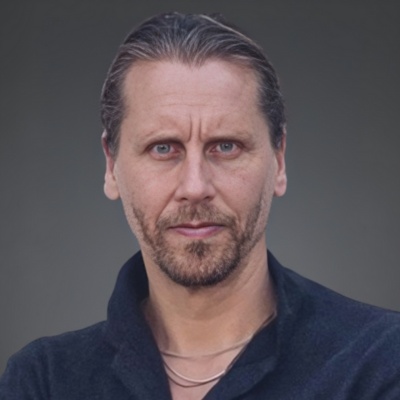
Beau Lotto
A neuroscientist and science communicator, recognized for his research on perception. He inspires others with his ability to show how the brain interprets the world, fostering curiosity and an open-minded approach to rethinking reality.
How do I book Beau Lotto?
Who is Beau Lotto?
Beau Lotto has devoted decades of research to studying how humans see and perceive the world. He was a professor at University College London (UCL) for 20 years and is currently a visiting scholar at New York University (NYU). His unique approach, which combines neuroscience with art, fashion, and technology, has allowed him to bring his ideas to a massive audience, notably through his three TED Talks, which have amassed millions of views.
Lotto’s central thesis is that the brain does not perceive reality objectively, but rather interprets it based on past experiences (historical data), creating biases and assumptions. Through experiments with optical and visual illusions, Lotto demonstrates how what we see is not always true, but rather our brain’s best guess at making sense of the information. For Dr. Lotto, the greatest challenge of adaptation and innovation is daring to question certainty and embracing doubt—the “I don’t know”—as the starting point for change and personal evolution.
In the business and social spheres, Lotto is the founder and CEO of Lab of Misfits, described as the world’s first neurodesign studio. This company applies the principles of perceptual neuroscience to help organizations and leaders overcome their biases, unlock their creative potential, manage uncertainty, and transform their approach to innovation. He is also the CEO of Ripple, a company focused on developing groundbreaking patents in Augmented Reality (AR) and learning.
Through his companies and initiatives, Dr. Lotto focuses on Perceptual Intelligence, providing practical tools to help people take control of their own brain’s perceptions of themselves, others, and the world around them. His goal is to enhance well-being, creativity, and the ability of organizations to thrive in the face of rapid change. His legacy is having transformed a branch of science into a practical message about the need to see and act differently in order to achieve positive and lasting change.