Book Salim Ismail for Talks, Lectures, and Experience Creators

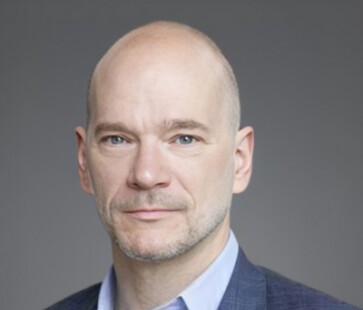
Salim Ismail
Entrepreneur and exponential innovation strategist. As the founder of ExO Works and Singularity University, he helps leaders anticipate change and create adaptive and disruptive organizations.
How do I hire Salim Ismail?
Who is Salim Ismail?
Salim Ismail is an Indian-Canadian serial entrepreneur, technologist, and strategist, known as the lead author of the bestseller *Exponential Organizations* and for his role as founding CEO of Singularity University. He is a leading voice in understanding how technology and the “moonshot” mindset are reshaping the business world.
His education and experience in building technology companies in Silicon Valley led him to develop a deep understanding of the pace of change in the digital age. He was the founding CEO of Singularity University (SU), an educational institution in Silicon Valley that he co-founded with Peter Diamandis and Ray Kurzweil. SU is dedicated to research and teaching on exponentially growing technologies, such as artificial intelligence, robotics, and nanotechnology.
His book *Exponential Organizations* has become essential reading for business leaders and technologists around the world. The book argues that, thanks to exponential technologies, an organization can grow at a rate ten times faster than its traditional competitors, but without a massive increase in costs. The book identifies and analyzes the attributes—such as Staff on Demand, Community, Algorithms, and Leased Assets—that characterize these disruptive organizations.
Ismail has worked as a technology strategy consultant and angel investor, helping global companies adopt the mindset and structures necessary to scale exponentially. His work promotes the idea that the key to corporate survival lies in adopting a mindset of abundance rather than scarcity and the willingness to be radically disruptive. His legacy is having provided the conceptual and practical framework that enables companies to understand and adapt to the pace of change in the knowledge economy.